Food Stories
Red Salsa vs. Green Salsa: Flavor Before Color
By Salsa’s Mexican Grill ·
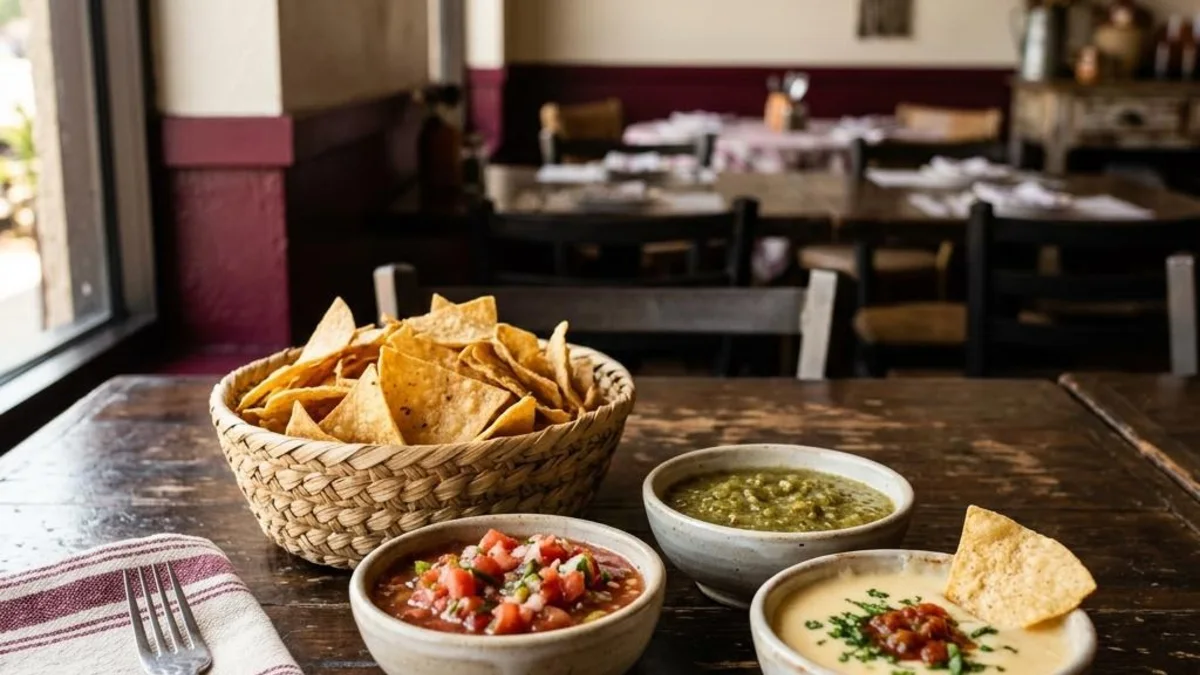
Editorial illustration of tortilla chips, salsa, and queso; actual restaurant offerings may vary
Red and green salsa can differ in ingredients and cooking method, but color alone does not tell you which is hotter. Here is how to compare them.
The ingredients tell a better story
Tomatoes and dried red chiles often appear in red salsas, while tomatillos and green chiles are common in green versions. These are broad patterns rather than rules. Roasting, simmering, and blending can change sweetness, acidity, and texture. A green salsa may be very hot, and a red one may be mild; the chiles and recipe determine more than the color.
Try a little before adding a lot
When choosing an enchilada sauce or adding salsa to tacos, ask about that specific preparation. At a Mishawaka meal, sampling a small amount can help you find a comfortable level without overwhelming the dish. Salsa’s enchilada descriptions include different sauce styles; read each one rather than assuming the colors describe identical ingredients. Allergy or dietary questions still require a conversation with the restaurant.
Plan your visit to Salsa’s
Explore the current menu before visiting Salsa’s Mexican Grill at 4160 Grape Rd, Mishawaka, Indiana. Use our directions page to plan your route, or contact the restaurant with ingredient and group-order questions. Current menu descriptions and direct confirmation should guide your order.
Explore the menu · Plan your visit · Contact Salsa’s
Frequently asked questions
Is green salsa always milder than red salsa?
No. Heat depends on the chiles and recipe, not the color. Ask about the sauce and add it gradually if you are unsure.